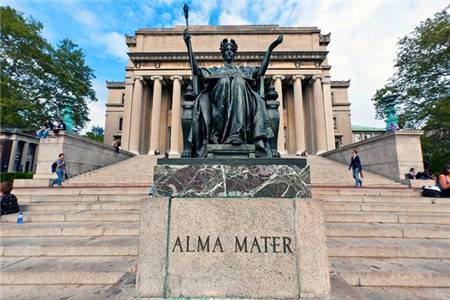
2020年哥伦比亚大学工程力学硕士入学条件及哥伦比亚大学工程力学硕士实习就业是申请留学的同学十分关心的话题,下面指南者留学详细整理2020年哥伦比亚大学工程力学硕士入学条件及实习就业相关信息供大家参考,其中包括2020年哥伦比亚大学工程力学硕士专业中文名、专业英文名、学制、学费、入学时间、授课语言、地理位置、课程领域、申请费、课程介绍、申请材料、课程设置、就业等。
专业介绍
美国哥伦比亚大学工程力学硕士课程为学生提供应用数学和连续介质力学原则的综合训练,并让学生有能力把这些原则应用到工程问题的解决上去。工程力学硕士强调基本原则,使学生在广泛的技术领域中进行选择就业。学生可以解决系统分析,声学,和应力分析等学科的问题,以及其他多样化的领域的问题,如交通,环境,结构,核,航空航天工程的问题。美国哥伦比亚大学工程力学硕士课程涵盖的领域有:连续介质力学;振动;随机过程和可靠性;流体力学和计算力学。
Programs in engineering mechanics offer comprehensive training in the principles of applied mathematics and continuum mechanics and in the application of these principles to the solution of engineering problems. The emphasis is on basic principles, enabling students to choose from among a wide range of technical areas. Students may work on problems in such disciplines as systems analysis, acoustics, and stress analysis, and in fields as diverse as transportation, environmental, structural, nuclear, and aerospace engineering. Program areas include:
Continuum mechanics: solid and fluid mechanics, theories of elastic and inelastic behavior, and damage mechanics
Vibrations: nonlinear and random vibrations; dynamics of continuous media, of structures and rigid bodies, and of combined systems, such as fluid-structure interaction; active, passive, and hybrid control systems for structures under seismic loading; dynamic soil-structure interaction effects on the seismic response of structures
Random processes and reliability: problems in design against failure under earthquake, wind, and wave loadings; noise, and turbulent flows; analysis of structures with random properties
Fluid mechanics: turbulent flows, two-phase flows, fluid-structure interaction, fluid-soil interaction, flow in porous media, computational methods for flow and transport processes, and flow and transport in fractured rock under mechanical loading
Computational mechanics: finite element and boundary element techniques, symbolic computation, and bioengineering applications